
Ayahuasca ceremonies
Ayahuasca ceremony: A guide to healing & transformation
Ayahuasca ceremony is a sacred and often deep traditional spiritual healing practice originating from indigenous tribes of the Amazon Rainforest. It centers on the consumption of a powerful psychoactive brew made from the Banisteriopsis caapi vine and the leaves of the Psychotria viridis shrub.
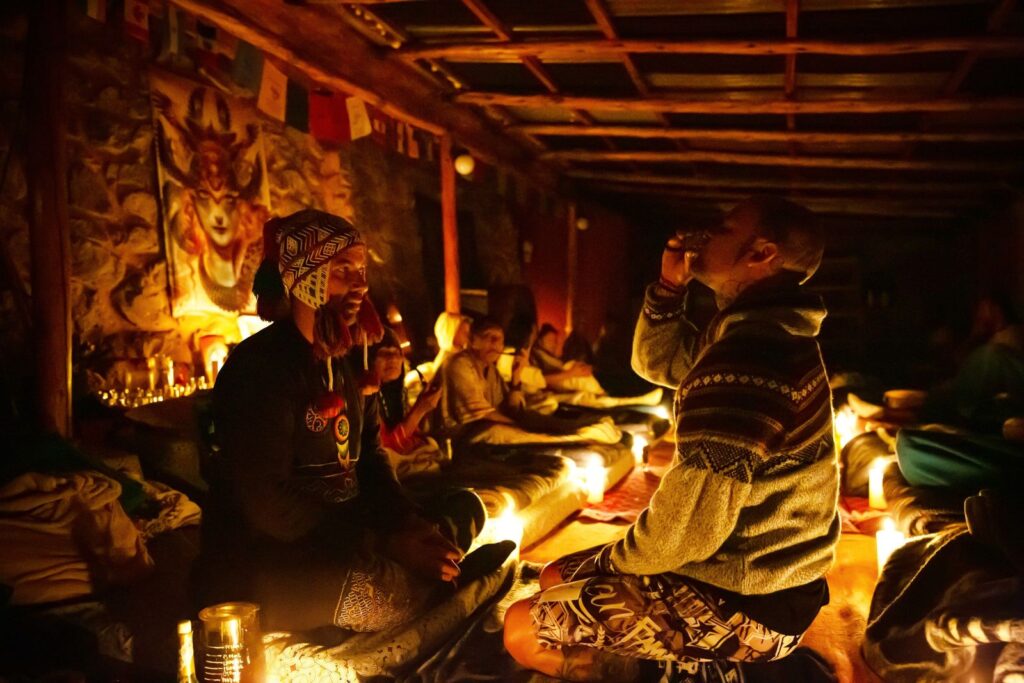
Participants drink the thick, bitter brew individually after discussing intentions with the healer.
Also, the shamans lead the ceremonial consumption of the ayahuasca beverage, in a rite that typically takes place over the entire night. During the ceremony, the effect of the drink lasts for hours. Prior to the ceremony, participants are instructed to abstain from spicy foods, red meat and sex. The ceremony is usually accompanied with purging which include vomiting and diarrhea, which is believed to release built-up emotions and negative energy.
Traditional use of ayahuasca
Ayahuasca ceremony in traditional South America vary greatly. Some cultures do use it for shamanic purposes, but in other cases, it is consumed socially among friends, in order to learn more about the natural environment, and even in order to visit friends and family who are far away.
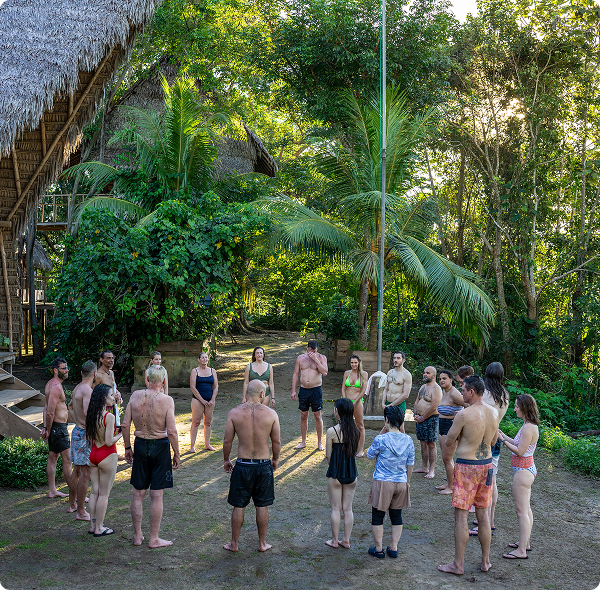
Nonetheless, people who work with ayahuasca in non-traditional contexts often align themselves with the philosophies and cosmologies associated with ayahuasca shamanism, as practiced among Indigenous peoples like the Urarina of the Peruvian Amazon. Dietary taboos are often associated with the use of ayahuasca, although these seem to be specific to the culture around Iquitos, Peru, a major center of ayahuasca tourism. Ayahuasca retreats or healing centers can also be found in the Sacred Valley of Peru, in areas such as Cusco and Urubamba, where similar dietary preparations can be observed. These retreats often employ members of the Shipibo-Konibo tribe, an indigenous community native to the Peruvian Amazon.
Beginning and ayahuasca ceremony
The beginning of ayahuasca isn’t the moment you drink the brew; it’s the Maloka (the ceremonial hut) at sunset. It’s the smell of Mapacho tobacco and the sound of the jungle waking up. There is a specific kind of silence.
In ceremony, you “work with” something. The shaman will often tell you to bring an Intention. You don’t tell the medicine what to do because it not a demand. You request for the medicine to show you what you need to see
The Golden Rule of Ayahuasca: Approach with humility. The ego usually wants a fireworks show; the spirit usually needs a mirror.
Ayahuasca doesn’t give you a vacation from yourself; it gives you a deep-dive into yourself.
The beginning of a ceremony is a commitment to honesty. You are stripping away the social masks, the titles, and the trauma to see what lies underneath. It’s a homecoming, even if the road back is a bit bumpy.
Ayahuasca sacred Healing Songs
The Sacred ayahuasca songs popular called Icaros, are more than just music. when it comes to the ceremony, they are the direction, the medicine, and guides all rolled in one. These songs are not to be be understood as a performance but rather as existing bridges between the physical & spiritual worlds.
The Mestizo traditions believe that Icaros are not composed by humans in the traditional sense. They believe that Icaros are gifted to the healers (Curanderos) by the spirits of the plants themselves during long periods of isolation and fasting, known as a dieta. When a shaman sings, they aren’t just making sound; they are “calling” the energy of a specific plant (like Tobacco, Rose, or the Ayahuasca vine itself) to enter the room and work on the patient.
What happens after the ayahuasca ceremony
When the music fades and the shaman blows out the last candle, which is the end of an ayahuasca ceremony but it isn’t really a finish line—it’s more of a soft landing. If you’ve ever been in a deep, vivid dream and suddenly woken up to a quiet room, you have a rough idea of the headspace.
Here is what the aftermath of a ceremony actually looks like.
The Physicality: Your body often feels exhausted and incredibly light. If for example there was “purging” (vomiting) earlier, the nausea is usually replaced by a profound sense of emptiness—not a lonely emptiness, but a “cleared out” feeling.
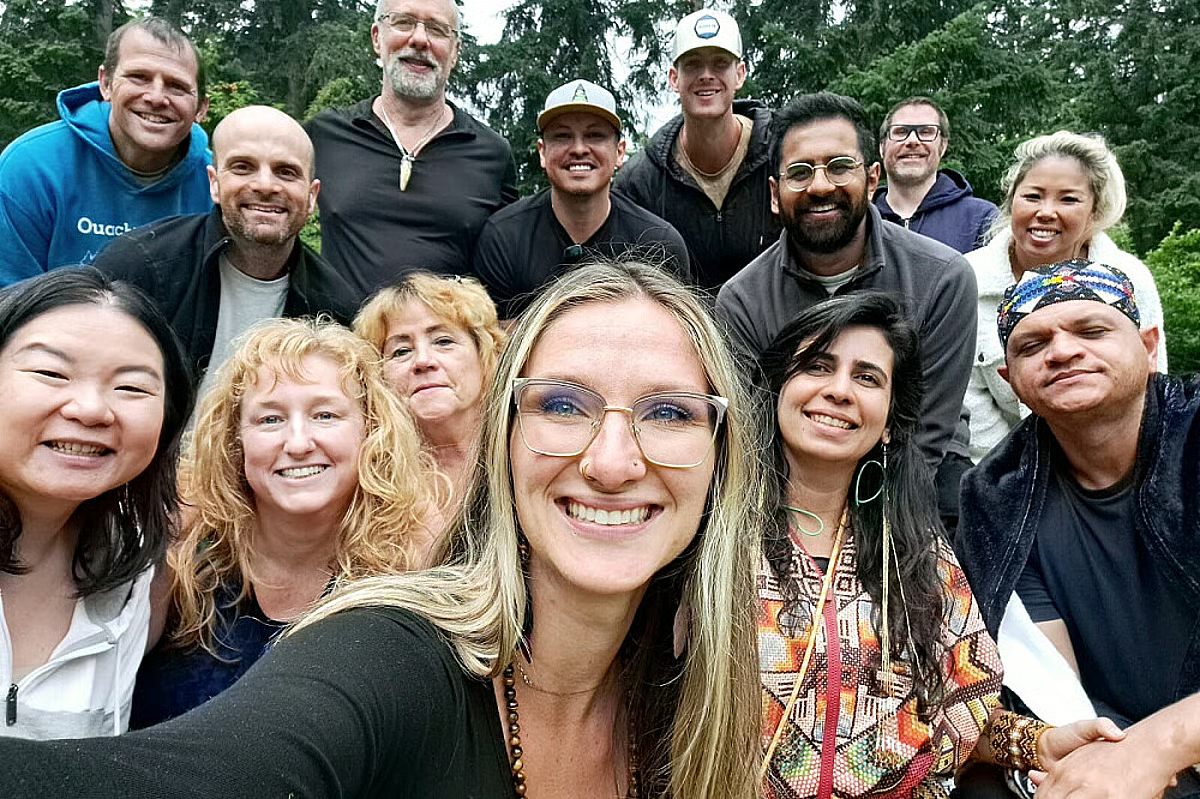
The Atmosphere: There’s a shared bond with the people around you, even if you didn’t exchange a single word during the journey.
Closing the Space: The shaman or facilitator will typically perform a closing song or prayer to “seal” the energy of the room.
The First Meal: You’ll often be given something very simple to eat, like fruit or crackers. After hours of fasting and intense psychological work, tasting a piece of watermelon can feel like a spiritual experience in itself.
Integration: The Real Ceremony Begins: There is a phrase that says a ceremony last for a while but integration last for a lifetime.
The integration period is very important because its the period when things seem brighter and your internal critic is quiet.
You start processing the messages. This is when you often feel the urge to make big life changing decisions.